
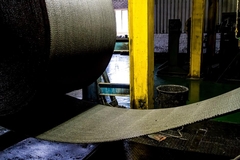
The journey of rubber from a simple raw material to a finely crafted finished product is both intricate and fascinating. For businesses and industries reliant on rubber manufacturing in Minneapolis, understanding this process can greatly influence decision-making and operational efficiencies. Rubber plays an indispensable role in various sectors, from automotive to healthcare, emphasizing the need for meticulous attention at every stage of production. Throughout this article, we will delve into the rubber manufacturing process, uncovering the significant steps and techniques used to transform raw rubber into products that meet rigorous standards of quality and precision.
Understanding the Raw Materials
Rubber manufacturing begins with sourcing raw materials. Two primary types of rubber are used: natural and synthetic. Natural rubber is derived from the latex of rubber trees, primarily grown in tropical regions. On the other hand, synthetic rubber is chemically produced, offering distinct properties suitable for various applications. The raw materials' selection hinges on the intended product's requirements, balancing factors like elasticity, durability, and resistance.
The rubber manufacturing process involves blending these raw materials with additives to modify the rubber's properties. These compounds are critical for achieving the desired characteristics in the final product. Fillers like carbon black enhance durability, while plasticizers improve flexibility. This initial stage forms the backbone of the entire process, setting the precedent for quality and performance.
Mixing and Compounding
Once the raw materials are selected, they undergo a process known as mixing or compounding. This is where the magic of rubber manufacturing truly begins. The chosen raw materials are mixed with various chemicals to create a homogenous compound. This process ensures that the rubber's properties are uniform throughout and meets the specific needs of its intended application.
During rubber manufacturing in Minneapolis, the precision of mixing and compounding is paramount, as deviations can lead to faulty products. Effective mixing also impacts the consistency of the following stages, eliminating potential issues that could arise during molding or extrusion. Achieving the right balance of ingredients requires not just technical know-how but also an intimate understanding of rubber's nature.
Shaping the Future: Molding and Extrusion
Shaping rubber into its desired form involves molding and extrusion, two techniques crucial to the rubber manufacturing process. Molding employs heat and pressure to shape the rubber into predefined molds, creating items like gaskets, seals, and other intricate components. There are several molding methods, including compression, injection, and transfer molding, each offering unique benefits depending on the product's complexity.
Extrusion, by contrast, involves pushing the rubber compound through a die to create products with continuous cross-sectional profiles, such as tubes or hoses. Both molding and extrusion demand precision and care to ensure dimensional accuracy and structural integrity. Through various advancements, rubber molding in Minneapolis has evolved to become more efficient, delivering products that are both durable and tailored to specific industrial needs.
Curing: Perfecting the Material
Curing, or vulcanization, is a defining stage in the rubber manufacturing process, where the compounded rubber undergoes a chemical reaction to enhance its physical properties. This process involves heating the rubber with sulfur, a catalyst that forms cross-links between polymer chains, giving the rubber its elasticity and strength. The curing process is carefully monitored to achieve the optimal balance of hardness, flexibility, and resilience.
In addition to traditional vulcanization, modern techniques incorporate innovative methods like microwave and radiation curing to expedite the process while maintaining quality. Regardless of the method, the goal remains the same: producing rubber with consistent and reliable properties, ready to meet the rigors of its intended use.
Quality Control and Testing
No rubber manufacturing process is complete without rigorous quality control and testing. This stage verifies that the finished products adhere to the necessary standards of safety and performance. Various parameters such as tensile strength, elongation, hardness, and abrasion resistance are evaluated. These tests ensure that the rubber products can withstand their designated environmental conditions and stresses.
For rubber manufacturing in Minneapolis, this step is especially vital given the industry's high-stakes demands. Through meticulous testing, manufacturers can guarantee that their products not only meet but often exceed industry standards, building trust with clients and end-users alike.
Rubber Finishing Touches
Once the product has successfully passed quality control, it moves to the final stage of the rubber manufacturing process: finishing and assembly. Here, products are given their final shape and any excess material is trimmed away. This step may also involve polishing, painting, or additional treatments to enhance the product's functionality and appearance.
Furthermore, some products require assembly, where multiple rubber components are joined together with other materials. This can involve adhesives, mechanical fastening, or further molding processes. Each finishing touch is executed with precision to ensure that the product's integrity and aesthetics are maintained.
Leveraging Expertise in Rubber Manufacturing
The pathway from raw material to finished product in the rubber manufacturing process is a testament to the intricate craftsmanship and technical acumen embedded in each phase. It's not just about transforming materials, but about delivering solutions that meet specific needs with precision and reliability.
For businesses seeking superior rubber products, partnering with industry leaders like us ensures access to these sophisticated processes and expertise in rubber mill operations in Minneapolis. With deep-rooted industry experience, we stand as a beacon of quality and innovation, ready to cater to diverse rubber manufacturing needs.
Harnessing the expertise of a trusted partner ensures that products are not only superior in quality but also customized for unique applications, from conception through completion. Whether you're looking for tailored solutions or cutting-edge manufacturing techniques, we offer the insights and capabilities to propel your projects to fruition. Explore the possibilities and leverage our comprehensive services to elevate your product offerings today.