
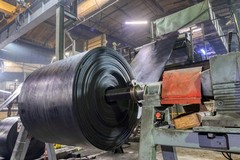
Rubber shows up in nearly every part of modern life, from the gaskets that seal your car engine to the seals that keep medical devices running safely. Yet most people rarely stop to ask a basic question: how is a rubber manufactured in the first place? The answer involves a surprising amount of chemistry, precision, and craftsmanship that transforms raw material into components engineered to withstand pressure, heat, and years of use. As a rubber manufacturer in Minneapolis, MN, we see every day how much care goes into turning raw polymers into reliable finished parts.
Whether rubber begins as sap from a tree or as a synthetic compound created in a lab, the journey from raw material to functional product follows a series of carefully controlled steps. Understanding that journey helps engineers, buyers, and curious readers appreciate why quality rubber components perform the way they do. Let us walk through the production process from start to finish.
Natural vs. Synthetic Rubber: Where It All Begins
The first thing to understand when exploring how a rubber is manufactured is that not all rubber starts the same way. Natural rubber comes from latex, a milky fluid harvested from rubber trees grown primarily in tropical climates. The latex is collected, treated, and processed into a solid form that can be shipped and worked with in manufacturing facilities around the world.
Synthetic rubber, on the other hand, is produced from petroleum-based materials through chemical processes. Polymers such as nitrile, EPDM, silicone, and neoprene are engineered to deliver specific properties, like resistance to oil, extreme temperatures, or harsh chemicals. This is one of the biggest advantages of synthetic rubber. Manufacturers can tailor the material to match exactly what an application demands. In practice, many finished products use a blend of natural and synthetic rubbers to balance performance, durability, and cost.
Compounding: Building the Right Recipe
Raw rubber on its own rarely has the properties needed for a demanding application. That is where compounding comes in. During this stage, the base rubber is mixed with a range of additives that determine how the final product will behave. These ingredients include fillers like carbon black for strength, curing agents that enable the material to set, antioxidants to resist aging, plasticizers for flexibility, and pigments for color.
Getting the recipe right is both a science and an art. A slight change in the proportion of any ingredient can dramatically affect hardness, elasticity, or chemical resistance. Experienced formulators rely on technical knowledge and testing to develop compounds that meet precise specifications. Our team approaches rubber compounding and milling with that level of attention, because the quality of the final part depends heavily on what happens at this early stage.
Mixing and Milling
Once a formula is established, the ingredients must be thoroughly blended into a uniform material. This typically happens in large industrial mixers or on milling machines that work the rubber under heat and pressure. The goal is to distribute every additive evenly throughout the batch so the finished compound behaves consistently from one part to the next.
Milling also prepares the rubber into a workable form, often as sheets or strips that can be fed into the next stage of production. Consistency here matters enormously. If the compound is not mixed properly, weak spots or uneven curing can appear later, leading to parts that fail prematurely. A well-run rubber mill in Minneapolis, MN takes great care to monitor temperature and timing throughout this process to protect the integrity of the material.
Shaping the Rubber: Molding, Extrusion, and More
With a properly mixed compound ready, the next question in how a rubber is manufactured becomes: how does it take its final shape? There are several common methods, each suited to different kinds of products.
- Compression molding: The rubber compound is placed into a heated mold cavity and pressed under high force, where heat and pressure cure it into the desired shape. This method works well for gaskets, seals, and larger parts.
- Injection molding: Rubber is heated and injected into a closed mold, allowing for high-volume production of complex, precise components with tight tolerances.
- Transfer molding: A hybrid approach that forces preheated rubber through channels into a mold, useful for parts with inserts or intricate features.
- Extrusion: The compound is pushed through a shaped die to create continuous profiles like tubing, cords, or weather stripping.
The method chosen depends on the part geometry, the production volume, and the performance requirements. Many manufacturers offer several of these processes so they can match the right technique to each project. You can learn more about the range of options on our rubber manufacturing capabilities page.
Vulcanization: The Step That Makes Rubber, Rubber
Perhaps the most important chemical step in understanding how a rubber is manufactured is vulcanization. Discovered in the nineteenth century, this process uses heat and curing agents, traditionally sulfur, to create cross-links between the polymer chains in the rubber. Before vulcanization, rubber is soft, sticky, and prone to melting or cracking. Afterward, it becomes strong, elastic, and durable.
Vulcanization is what gives rubber its signature combination of flexibility and resilience. The exact temperature, pressure, and curing time are carefully controlled, because over-curing or under-curing can compromise the final properties. In most shaping processes like compression and injection molding, vulcanization happens right inside the mold as the part is formed, which streamlines production while ensuring consistent results.
Finishing, Inspection, and Quality Control
After the rubber has been shaped and cured, there is still work to be done before a part is ready to ship. Excess material, called flash, often needs to be trimmed away. Some parts require additional machining, surface treatments, or assembly with other components. Throughout this stage, dimensional accuracy and surface quality are verified against the original specifications.
Quality control runs through the entire production process, not just the final step. Manufacturers test for hardness, tensile strength, elongation, and resistance to the specific conditions a part will face in service. This rigorous attention to detail is what separates dependable components from parts that fail under stress. Because rubber products serve so many different fields, from automotive to medical to industrial equipment, consistent quality is essential across every industry we serve in Minneapolis and neighboring communities.
Why the Process Matters
So, how is a rubber manufactured? As we have seen, it is far more than simply pouring material into a mold. The process combines material science, careful formulation, precise shaping, and the critical chemistry of vulcanization, all backed by constant quality checks. Each step builds on the one before it, and a shortcut anywhere along the way can undermine the performance of the finished part.
Understanding this process helps buyers make better decisions about the components they rely on. When a part is engineered correctly from the raw compound through final inspection, it lasts longer, performs better, and reduces costly downtime. That is the value a skilled manufacturer brings to every project, whether the job calls for a simple gasket or a complex custom component.
If you have questions about the production process or need components built to your exact specifications, our team is ready to help. Serving businesses throughout Minneapolis and the surrounding areas, we take pride in delivering rubber parts engineered for real-world performance. Reach out to get a quote or to talk through your next project, and let our experience work for you.