
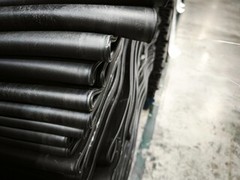
More than 60 percent of the rubber used around the world today is not harvested from trees at all. It is engineered in production facilities from petroleum-based building blocks, carefully balanced for strength, flexibility, heat resistance, and dozens of other properties. Understanding how synthetic rubber is made helps explain why this material shows up in everything from automotive seals and medical devices to industrial gaskets and consumer goods. As a custom rubber manufacturer in Minneapolis, we work with these materials every day, and the process behind them is far more fascinating than most people expect.
Synthetic rubber was developed in earnest during the early twentieth century, when natural rubber supplies became unreliable and demand kept climbing. What started as a wartime necessity grew into one of the most versatile material categories in modern manufacturing. The result is a family of polymers that can be tuned for specific jobs, something natural rubber alone could never fully deliver.
Where Synthetic Rubber Begins: Raw Materials
The journey starts with petroleum and natural gas. These raw sources are refined and broken down into smaller chemical compounds called monomers, which are the fundamental building blocks of synthetic rubber. Common monomers include butadiene, styrene, isoprene, and isobutylene, among others. Each one contributes different characteristics to the finished product, which is why so many distinct types of synthetic rubber exist.
Think of monomers as individual links that will eventually be joined into long chains. The specific monomers chosen, and the ratios in which they are combined, determine whether the final material resists oil, tolerates extreme temperatures, stays flexible in cold weather, or holds up under constant mechanical stress. This early selection stage is where a product's performance is largely decided, long before the rubber ever takes a recognizable shape.
Polymerization: Turning Monomers into Rubber
The heart of how synthetic rubber is made lies in a process called polymerization. During polymerization, those small monomer molecules are chemically bonded together into long, repeating chains known as polymers. There are two primary methods used to accomplish this. Emulsion polymerization mixes monomers with water, soap-like emulsifiers, and catalysts to form a milky substance called latex. Solution polymerization, on the other hand, dissolves monomers in a solvent and uses catalysts to build the polymer chains with greater precision.
The method chosen affects the consistency, purity, and performance of the resulting rubber. Temperature, pressure, and timing are all controlled carefully throughout this stage, because small variations can change the physical properties of the finished polymer. Once polymerization is complete, the rubber exists as either a liquid latex or a solid crumb, depending on the process, and it is ready to move on to drying and preparation.
Coagulation, Drying, and Baling
After polymerization, liquid rubber must be converted into a usable solid form. This is done through coagulation, where chemicals are introduced to separate the rubber from the water or solvent it was suspended in. The rubber then clumps together into crumb-like particles that can be washed and collected.
From there, the material is dried to remove moisture, pressed, and compacted into large bales for shipping and storage. These bales are the raw stock that manufacturers receive. At this point the rubber is stable and consistent, but it is not yet ready for production. It still needs to be transformed into a working compound tailored to a specific application, which is where the real craft of rubber manufacturing begins.
Compounding: Mixing in Performance
Raw synthetic rubber on its own is rarely used as delivered. To give it the properties a project demands, it goes through compounding, a stage where various additives are blended into the base polymer. These ingredients serve very different purposes, and getting the recipe right is both a science and an art.
- Fillers such as carbon black or silica add strength, durability, and wear resistance.
- Curing agents like sulfur enable the rubber to vulcanize and hold its shape.
- Plasticizers improve flexibility and make the material easier to process.
- Antioxidants and stabilizers protect against heat, ozone, and aging.
This blending happens on specialized equipment that mixes the ingredients thoroughly and uniformly. The quality of this step depends heavily on precision and experience. Our approach to rubber compounding and milling demonstrates how careful formulation translates into reliable finished parts. A well-run rubber mill in Minneapolis, MN is essential at this stage, since even minor inconsistencies in mixing can lead to performance problems down the line.
Shaping and Vulcanization
Once a compound is mixed, it is ready to be formed into a usable product. Depending on the part, this might involve molding, extrusion, calendering, or other shaping methods. Compression molding presses the compound into a heated mold cavity, while extrusion pushes it through a die to create continuous profiles like tubing or seals.
The final transformation comes from vulcanization, a heat-driven process that was one of the most important discoveries in rubber history. During vulcanization, heat and curing agents cause the polymer chains to form cross-links with one another. These cross-links give rubber its characteristic elasticity, strength, and resilience. Before vulcanization, rubber can be soft and prone to deforming. Afterward, it becomes a durable, springy material capable of returning to its original shape after being stretched or compressed. The temperature and duration of curing are controlled to match the exact requirements of each compound and part.
Finishing, Trimming, and Quality Control
After curing, parts often require finishing work to meet specifications. Excess material, known as flash, is removed, edges are trimmed, and surfaces are cleaned. Precision finishing may include rubber grinding in the Minneapolis area to achieve exact dimensions and smooth surfaces, which matters a great deal for components that must fit and seal perfectly within larger assemblies.
Quality control runs throughout the entire operation, not just at the end. Samples are tested for hardness, tensile strength, elongation, and other properties to confirm the finished rubber matches the intended design. This attention to detail is what separates reliable industrial components from parts that fail prematurely. Our full rubber manufacturing capabilities reflect how many steps go into producing a part you can trust.
Why This Process Matters for Your Project
Knowing how synthetic rubber is made reveals just how much engineering goes into even the simplest-looking component. Every seal, gasket, bumper, and custom part reflects decisions made at the molecular level, carried through compounding, shaping, and curing. The ability to control each of these stages is what makes custom rubber so valuable across industries like automotive, medical, agricultural, and industrial equipment.
From selecting the right monomers to final finishing, how synthetic rubber is made is a careful balance of chemistry, equipment, and craftsmanship. When those elements come together correctly, the result is a material perfectly suited to its purpose. Whether you need a specialized compound, a high-volume production run, or precise finishing work, our team serving Minneapolis and the surrounding areas is ready to help. Reach out to Hiawatha Rubber to discuss your project and get a quote tailored to your specifications.