
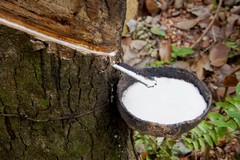
Most people assume rubber starts out black, but that is far from the truth. Before pigments, fillers, and curing agents enter the picture, the natural color of rubber is closer to a soft, milky off-white or pale amber. That raw appearance tells a story about where the material comes from and what happens to it as it moves through production. For anyone involved in rubber manufacturing in the Minneapolis area, understanding how and why color shifts during processing is more than trivia. It helps explain performance, consistency, and the choices that go into every finished part.
Color is one of the first things customers notice about a rubber product, yet it is also one of the most misunderstood. A change in shade does not always mean something is wrong. In fact, many color changes are expected, intentional, or simply the result of the chemistry involved. Below, we walk through what the natural color of rubber actually is and the many reasons it transforms on its way to becoming a durable, functional component.
What the Natural Color of Rubber Really Is
Natural rubber comes from latex harvested from the Hevea brasiliensis tree. In its freshest liquid state, that latex appears milky white, similar in look to thin cream. Once it is coagulated and dried into sheets or crepe, the natural color of rubber settles into a range of pale tones, from nearly white to light tan or honey amber. The exact shade depends on the processing method, the drying conditions, and how much the material has been exposed to air and heat.
Synthetic rubbers tell a slightly different story. Many are produced from petroleum derivatives and can range from clear to light yellow or faint gray in their uncompounded form. Even so, the base material rarely arrives jet black. That deep, familiar black most people associate with rubber products is almost always the result of what gets added later, not the raw polymer itself.
Why Color Shifts During Compounding
The biggest reason rubber changes color is compounding, the stage where the raw polymer is blended with other ingredients to achieve specific properties. Carbon black is one of the most common reinforcing additives, and it is responsible for much of the black rubber you encounter. It is not added for appearance alone. Carbon black reinforces the rubber, improves abrasion resistance, and helps protect against ultraviolet degradation. When mixed in, it overwhelms the lighter base and produces that signature dark finish. Research from the University of South Florida on how carbon black reinforces rubber explains how these particles improve the strength and durability of rubber materials.
Other fillers, oils, and curing chemicals also influence the final tone. Clays, silicas, and mineral fillers can keep a compound lighter or give it a slightly off-white or gray cast. Antioxidants and antiozonants, which help the material resist cracking and aging, sometimes introduce faint yellow or brown tints. Each ingredient plays a functional role, and color is often a side effect of the recipe rather than the goal. The careful balancing of these materials is a core part of rubber compounding and milling, where the right blend makes all the difference in how a part performs.
How Heat and Curing Affect Appearance
Processing rubber involves significant heat, and heat has a direct effect on color. During vulcanization, the stage where rubber is cured to lock in its elastic properties, the material is subjected to high temperatures that trigger chemical crosslinking. This process can darken or deepen the tone of the compound, even in formulations that do not contain carbon black. A pale compound may emerge from the mold noticeably darker than it went in.
Oxidation plays a part too. As rubber is exposed to oxygen and heat over time, its surface chemistry changes, which can lead to subtle shifts toward yellow, amber, or brown. This is why some lighter colored rubber parts may gradually change shade during storage or use. For precision work like rubber molding, controlling temperature and timing is essential to achieving consistent color from one production run to the next. Small variations in cure can produce visible differences, so experienced manufacturers monitor these conditions closely.
When Color Is a Deliberate Choice
Not all color comes from the processing itself. In many cases, color is engineered intentionally to meet a customer's needs. Pigments can be added to create red, blue, green, or virtually any shade required for identification, branding, or safety coding. A medical device may call for a specific tint, while an industrial seal might be color matched so technicians can quickly identify the correct part on an assembly line.
Producing a consistent custom color is more demanding than it sounds. The base compound, the fillers, and the curing process all interact with the pigment, so a formula that looks right in one batch must be carefully controlled to look identical in the next. A skilled custom rubber manufacturer in Minneapolis, MN approaches color as part of the overall engineering of a part, balancing appearance with the mechanical performance the application demands. This attention to detail is part of what separates general production from true specialized rubber manufacturing capabilities.
What Color Can Tell You About Quality
Because color is tied so closely to compounding and processing, it can sometimes serve as a visual clue about consistency. A sudden, unexplained change in shade between batches may signal a variation in raw materials, mixing, or curing. That said, color alone is not a reliable measure of quality. A perfectly dark part can still be out of specification, and a lighter one can perform flawlessly. The relationship between the natural color of rubber and its final appearance simply reminds us how many variables are at work.
This is why repeatability matters so much in manufacturing. Controlling the natural color of rubber through every stage, from raw material selection to the final cure, reflects disciplined process control. Customers across industries rely on that consistency, whether they are ordering a handful of prototype seals or a large production run of custom components. Our rubber and elastomer development in Minneapolis reflects the kind of experience that keeps results predictable.
Bringing It All Together
The natural color of rubber is a pale, understated starting point that rarely resembles the finished products we see every day. From the milky white of fresh latex to the deep black of a reinforced industrial part, color changes are driven by compounding ingredients like carbon black, by the heat of vulcanization, and by deliberate pigment choices made to suit each application. These changes reflect the materials and processing decisions that determine how a part should perform.
Understanding these fundamentals helps customers appreciate what goes into a quality component and why consistency is worth prioritizing. If your project calls for precise color matching alongside dependable performance, working with an experienced partner in rubber molding in Minneapolis, MN and the surrounding communities makes all the difference. To learn more about how we approach materials, processing, and custom solutions, feel free to get to know our team and capabilities or reach out to discuss what your next part requires.