
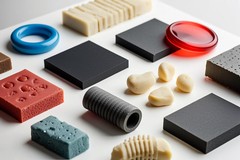
Choosing the wrong rubber for a component can quietly undermine an entire product, leading to premature failures, warranty claims, and costly downtime. That is why understanding the various rubber manufacturing in Minneapolis or whereve you might be (and your options) is one of the most valuable steps an engineer or product designer can take before a single part is molded. Each elastomer has its own personality, from how it handles heat to how it stands up to oils and chemicals.
The good news is that once you understand the basic categories of rubber material types, matching a compound to your application becomes far more straightforward. In this guide, we will walk through the most common elastomers, what makes each one distinctive, and the practical questions that help narrow the field. Whether you are designing a seal, a gasket, a vibration mount, or a custom molded part, the right material choice sets the foundation for long-term performance.
Why Material Selection Matters More Than You Think
Rubber is not a single substance. It is a broad family of natural and synthetic polymers, each engineered for a particular balance of flexibility, durability, and resistance to environmental stress. A compound that performs beautifully in a dry indoor application may crack and harden when exposed to ozone, sunlight, or petroleum. Conversely, a rubber built to shrug off aggressive chemicals may cost far more than a project actually requires.
Getting the selection right means weighing performance against budget, production volume, and the conditions the part will face over its lifespan. This is where working with an experienced partner pays off. We have spent decades helping customers across Minneapolis and the surrounding areas translate real-world demands into the correct compound, avoiding both over-engineering and under-performance.
The Most Common Rubber Material Types
While there are dozens of specialized compounds, most projects begin with a handful of widely used elastomers. Understanding these core rubber material types gives you a solid frame of reference before diving into more exotic formulations.
Natural Rubber (NR) offers excellent tensile strength, resilience, and abrasion resistance. It is a favorite for anti-vibration mounts, bushings, and applications requiring high elasticity. Its weakness is poor resistance to oils, ozone, and extreme heat, so it is better suited to indoor or protected environments.
Nitrile (NBR) is the workhorse for anything involving petroleum, fuels, and oils. Seals, gaskets, and hoses in automotive and hydraulic systems frequently rely on nitrile because it resists swelling in contact with these fluids. It performs reliably across a moderate temperature range, which makes it a versatile everyday choice.
EPDM shines outdoors. It stands up remarkably well to weather, ozone, UV exposure, and steam, which is why it appears in roofing membranes, weather seals, and outdoor gaskets. However, it is not the right pick for oil or fuel contact, where it will degrade quickly.
Silicone handles temperature extremes with ease, staying flexible in bitter cold and holding up under high heat. It is also inert and clean, making it popular in food, medical, and electrical applications. The tradeoff is lower tensile strength and abrasion resistance compared to tougher compounds.
Neoprene (CR) is a balanced all-rounder, offering moderate resistance to oil, weather, and chemicals along with good flame resistance. When an application needs a little of everything without extreme demands in any single area, neoprene is often a dependable answer.
Viton (FKM) is the premium choice for high heat and aggressive chemical exposure. It excels where other elastomers would fail, though it carries a higher cost, so it is typically reserved for demanding sealing environments.
Key Questions That Guide the Right Choice
Rather than memorizing every compound, most engineers arrive at the correct material by answering a series of practical questions about the operating environment. The answers naturally rule out unsuitable options and highlight the strongest candidates.
- What temperatures will the part experience, both maximum and minimum?
- Will it come into contact with oils, fuels, solvents, or other chemicals?
- Is the part exposed to sunlight, ozone, or outdoor weather?
- How much flexing, compression, or abrasion will it endure?
- Are there industry requirements, such as food-grade or medical-grade standards?
- What is the expected production volume and target cost?
Once these factors are on the table, the field of viable rubber material types usually narrows to just one or two strong contenders. From there, fine-tuning the hardness, or durometer, and the specific compound formulation dials in the final performance.
From Compound to Finished Part
Selecting the polymer is only the beginning. How that raw material is processed has a major impact on the finished component. Compounding blends the base polymer with fillers, curing agents, and additives that tailor its properties, and precise mixing on a rubber mill ensures consistency from batch to batch. If you want to dig deeper into that stage of the process, our overview of rubber compounding and milling explains how these formulations come together.
After compounding, the material moves into forming. Rubber molding shapes the compound into the final geometry under heat and pressure, while secondary steps like rubber grinding refine dimensions and surface finish where tight tolerances are required. For customers who need custom rubber molding in Minneapolis, MN, coordinating material choice with the molding method from the outset helps avoid surprises and produces parts that meet spec the first time. You can review our full range of processes on our manufacturing capabilities page.
Common Mistakes to Avoid
One of the most frequent missteps is choosing a compound based on cost alone without accounting for the operating environment. A cheaper rubber that fails after a few months in the field ends up far more expensive than the right material chosen up front. Another common error is overlooking secondary exposures, such as cleaning agents or intermittent heat spikes, that quietly degrade a part over time.
Designers also sometimes over-specify, reaching for a premium elastomer like Viton when a well-formulated nitrile or neoprene would perform just as well at a fraction of the cost. Understanding the true demands of the application, rather than defaulting to the toughest option, keeps projects both reliable and economical. This balance is exactly where an experienced manufacturing partner adds the most value.
Making the Right Choice with Confidence
The right elastomer comes down to matching material properties to real operating conditions: temperature, chemical exposure, weather, mechanical stress, and any regulatory requirements your industry demands. Natural rubber, nitrile, EPDM, silicone, neoprene, and Viton each occupy a distinct niche, and knowing where each one excels turns a confusing decision into a clear one. When in doubt, start with the environment your part will live in and let those conditions guide you.
Understanding rubber material types is far easier with a knowledgeable team at your side, especially when your project involves custom compounds or tight tolerances. We have helped manufacturers throughout Minneapolis and neighboring communities pair the right material with the right process for reliable, cost-effective results. If you are weighing options for an upcoming project, reach out for a free quote and let our experience help you get it right from the first part forward.